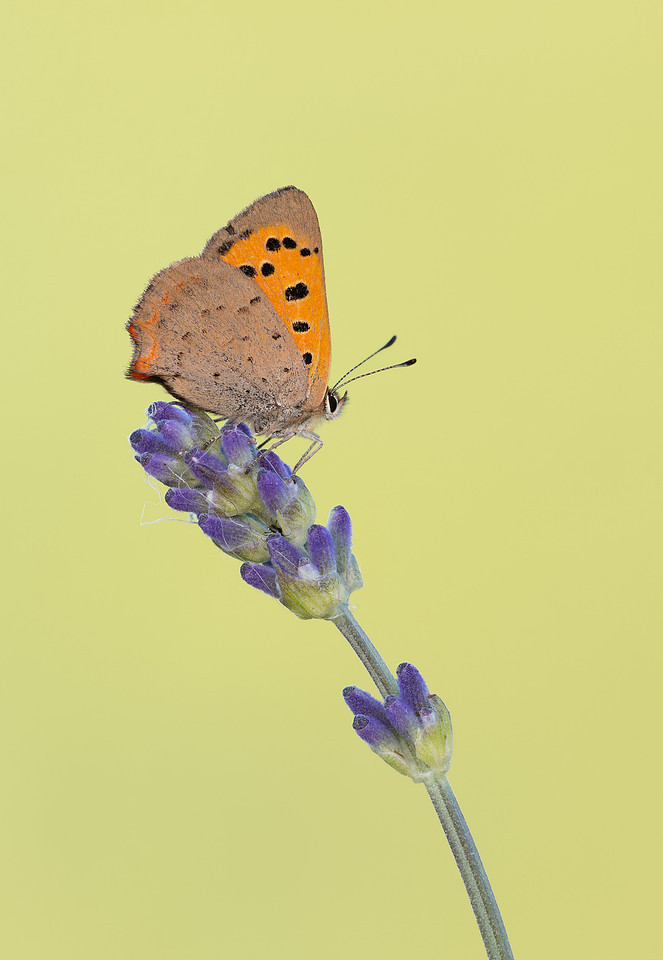
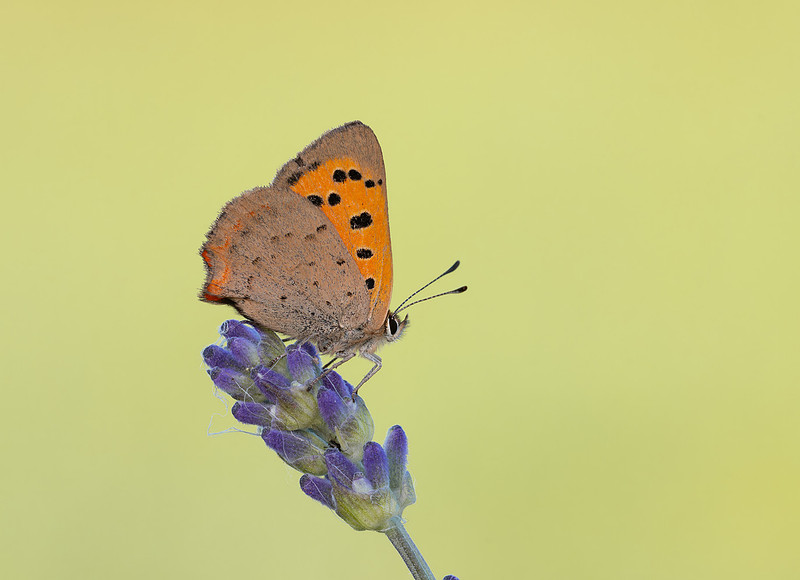
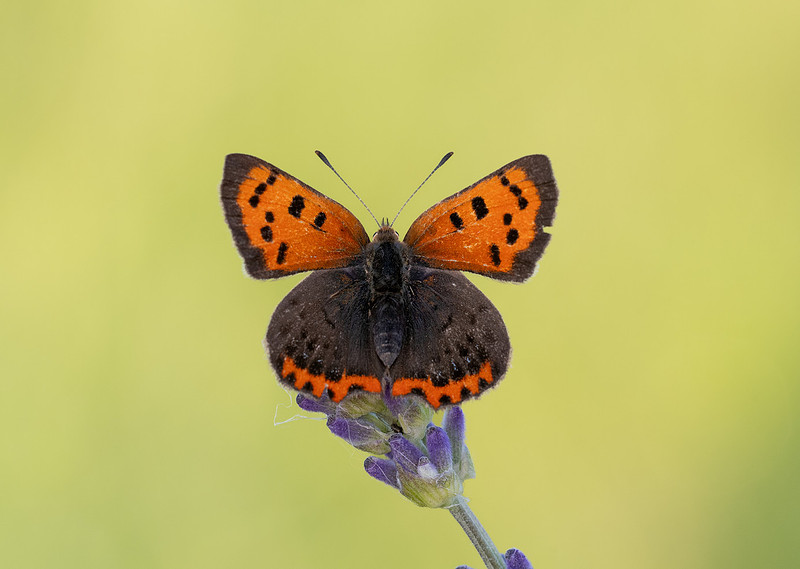
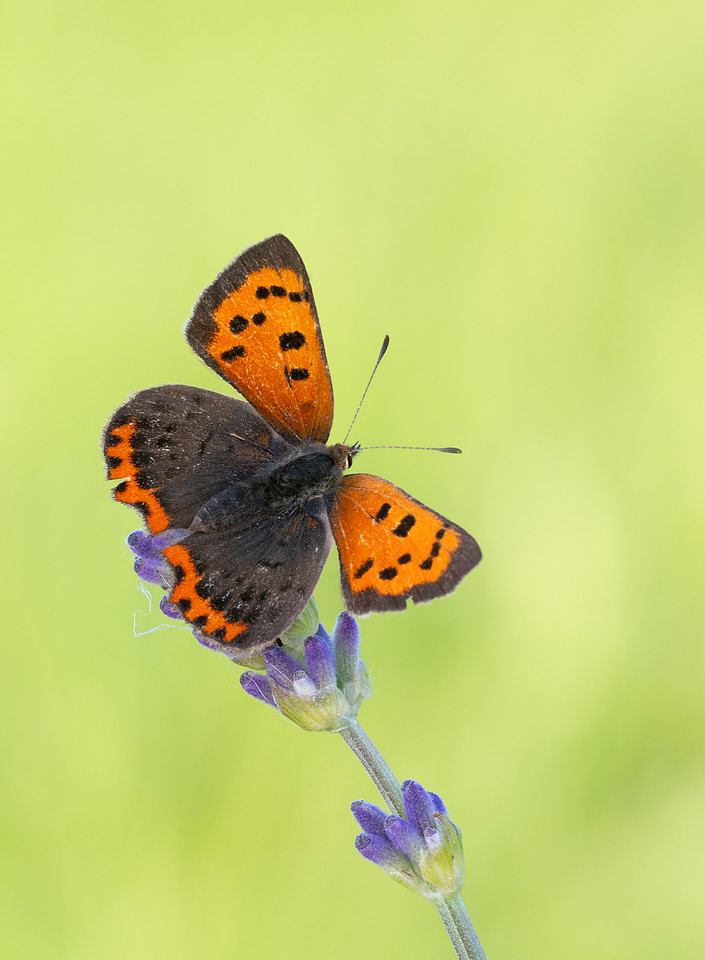
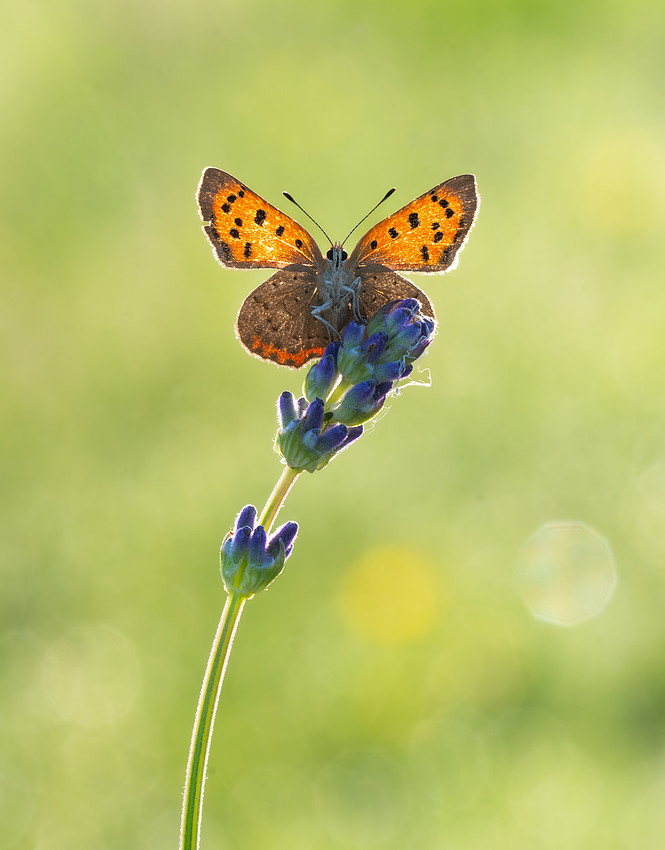
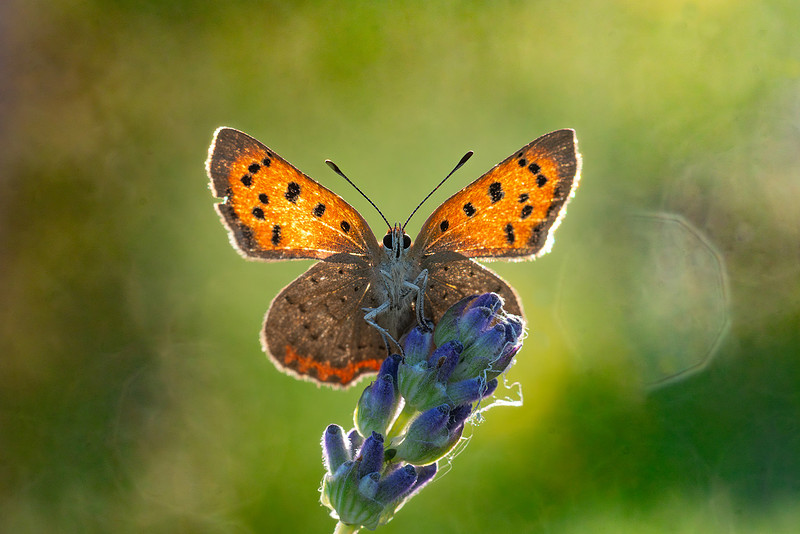
Small CoppersDuring an evening dog walk back in May this around our local village and surrounding fields, I encountered a healthy brood of Small Coppers (Lycaena phlaeas). This is a butterfly that I absolutely love and chances to photograph them are pretty seldom. With a new location established and a favourable weather forecast for the following morning, I set an early alarm and made my way to where I'd found the brood the night before. As is often the case, finding butterflies that are roosting can be pretty tricky, with the orange wings of the Small Copper closed and the underwing providing ample camouflage. With the sun rising fast, I felt the usual fear of either finding the butterflies too late, or not finding them at all. So, what's my approach to finding roosting butterflies? How to find roosting butterflies Here are my main tips and tricks for finding and photographing roosting butterflies, with these tried and tested after many years of exploring. They aren't a guarantee that you'll find something, but they serve me well. Get out early The majority of the butterfly season here in the UK spans the summer months. This means butterflies can often be on the wing very early in the day, especially during hotter spells. Most species tend to become most active when the temperature is 16C and upwards, so getting out before sunrise is a really good way of finding butterflies when they're still cool (torpid) and less likely to fly off. Cooler mornings are great because they can often mean dew, which coats butterflies with an almost crystalline-like covering of water drops, adding a much more dynamic look to images. Use the evening before As was the case described in this post, I found a number of butterflies during the evening, though admittedly not all were roosting and they weren't where I found them the following morning. That being said, if time allows, going out during the last hour or so of daylight can often mean you find butterflies going to roost where they'll likely still be the next day. This is always a real bonus as it means you avoid long searches and can maximise time shooting them before they take to the air once they've warmed up. Get low Getting low down in wildlife photography is often key to nailing a good image. An eye level image of a bird or mammal pretty much always trumps one where you're looking up or down at it. Something I found works really well for butterfly photography is a similar approach when actually searching for your subject, as the shape of the butterfly is often more distinctive and obvious from eye level as opposed to looking down into long grasses, for example. I often crouch down and scan (sometimes with binoculars) the grasses/plants on which I'm expecting to find something. This has worked many times and I definitely suggest trying it out. Know their habitats It goes without saying that some knowledge of foodplants and habitat is essential when looking for butterflies, and I have learnt over the years that butterflies often choose particular plants and flowers on which to roost. This again allows you to focus your search, so look for patterns when you do find a roosting butterfly, noting what plant it's on for example. Check the weather forecast I've already covered the importance of taking advantage of cooler conditions, but another element that you must consider is wind. This is the absolute nemesis of macro photography, as even a gentle breeze can play havoc with getting a sharp and in focus shot. Again, getting out very early can mean you can catch calmer conditions, but always check the forecast before heading out as this will save many unnecessary early alarms! Wait for things to warm up You've found your subject, you've got some lovely images of it roosting, and the sun is really warming up. Many times in the past I've had to pack up and head home / to work but this can be a brilliant opportunity when time allows. When you have a perched butterfly in front of you, chances are it will begin to open it's wings to absorb the heat once the sun is on it. This can provide rare opportunities to capture the butterfly with wings open in a setting that often provides a cleaner background. Just watch your shadow, as this can spook the butterfly into flying before you're ready! Fortunately, I did manage to locate a few butterflies before the heat kicked in and managed a really enjoyable session of macro photography with my target species. Small Coppers always seem to pose really nicely, especially when the sun is on them. My favourite angle is to shoot them head on, with some backlighting, and this was a successful approach once again, with a small selection of images below.
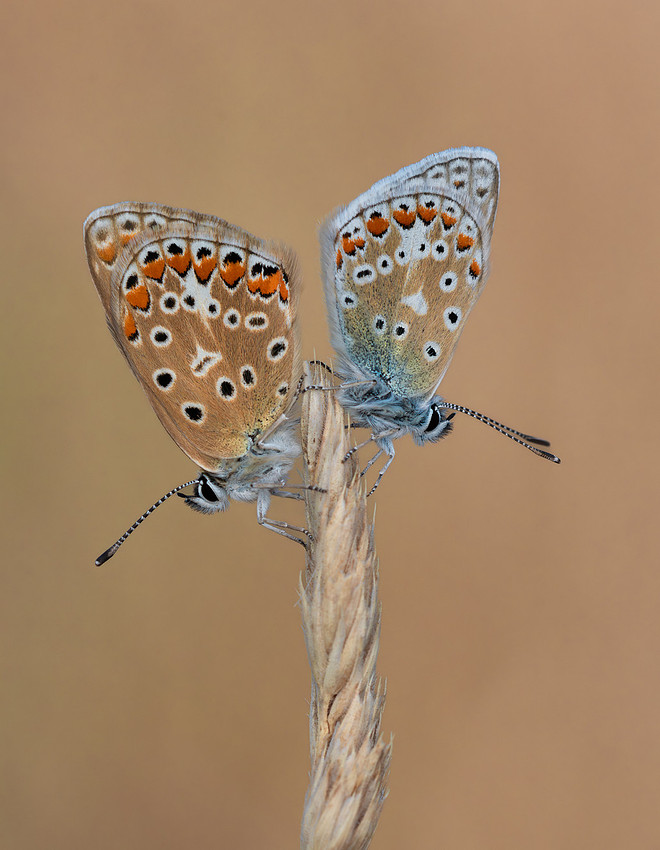
Readers in the UK will be well aware that this year was quite exceptional in terms of heat, so it will be interesting to see what happens next year in terms of butterfly numbers. On the whole this year, I have seen some big changes in certain species, with Orange-tips, Painted Ladies, Common Blues and Clouded Yellows seen more than over the last few years. Photography wise, I did manage to get out for some Common Blues, with this pair posing nicely to demonstrate the size difference between male and female and this is the last butterfly image I've managed to date in 2026 and it's now highly likely that the next one will come in 2027, so I'll leave you with this one.
Keywords:
Butterflies,
Butterfly,
Butterfly photography,
Cotswolds,
Lycaena phlaeas,
Macro,
Macro photography,
Nature,
Photography,
Small Copper,
Small copper butterfly,
Wildlife
Comments
No comments posted.
Loading...
|